
Bwindi Community and Nature Walks – Explore Forest Trails & Local Culture in Bwindi Impenetrable National Park – A Complete Guide Bwindi Impenetrable National Park is globally famous for its mountain gorilla trekking, hosting nearly half of the world’s remaining mountain gorilla population. However, beyond gorilla encounters, nature walks in Bwindi offer an immersive way to experience this ancient rainforest. With a network of scenic trails and cultural experiences, Bwindi is a paradise for hikers, birders, and nature lovers alike.
Why Choose Bwindi Community and Nature Walks – Explore Forest Trails & Local Culture
Nature walks in Bwindi provide a unique and intimate connection with the forest, unlike motorized safaris. These guided treks allow visitors to move at a slower pace, observing the intricate details of the ecosystem—from monkeys and birds to rare butterflies and medicinal plants. For cultural enrichment, some walks include visits to the Batwa community, where you’ll learn about the traditional forest lifestyle of these indigenous people.
Whether you’re a hiker, birdwatcher, or cultural enthusiast, nature walks in Bwindi offer a blend of wildlife, education, and adventure.
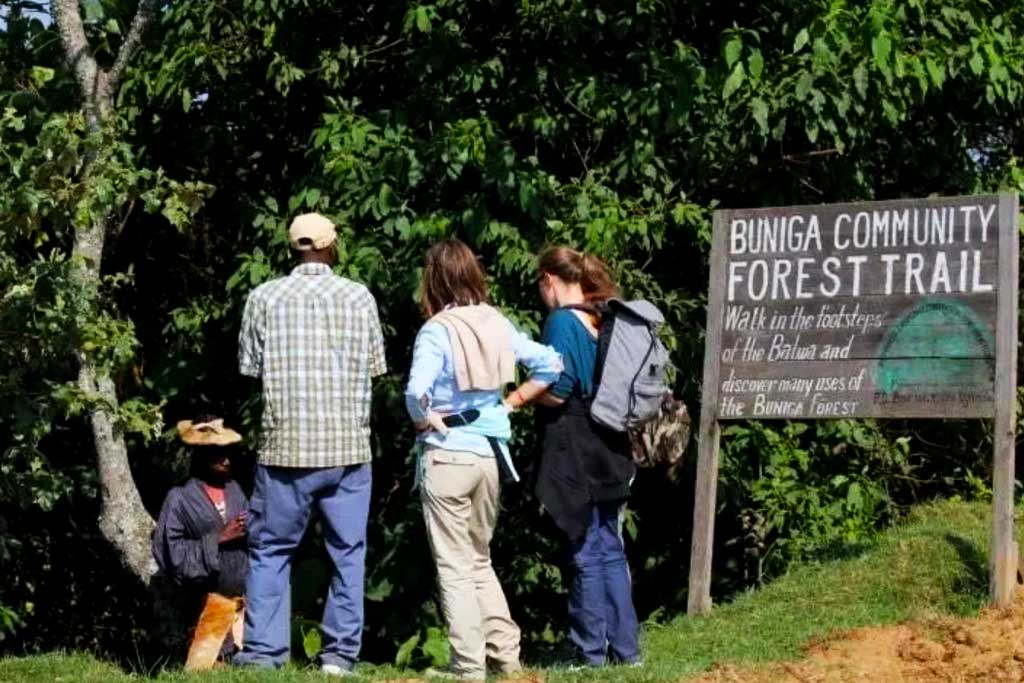
Bwindi Community and Nature Walks – Explore Top Trails
1. Ivy River Trail
This 6.5-hour trail follows a scenic river and cuts through lush rainforest teeming with birds, monkeys, and butterflies. It’s a moderately challenging trek with stunning natural beauty.
2. Kashasha Trail
The Kashasha Trail is a direct 13km route between Buhoma and Nkuringo, taking about 4–7 hours depending on direction. It’s a rich trail for spotting wildlife and offers a more remote, adventurous experience.
3. Munyaga River Trail
Ideal for a short, easy hike (about 40 minutes), this trail starts near Buhoma and doesn’t require a guide. It’s perfect for birdwatchers and families with limited time.
4. Waterfall Trail
A popular 3-hour hike that rewards trekkers with a stunning three-tiered waterfall. Along the way, look out for orchids, ferns, and black-and-white colobus monkeys.
5. Bamboo Trail
This high-altitude trail leads through bamboo forests and is perfect for birders looking to spot Albertine Rift endemics like the regal sunbird and handsome francolin.
6. Lake Mutanda Walk
This beautiful hike connects Bwindi to Lake Mutanda, offering breathtaking views and a chance to explore both forest and lake ecosystems.
Cultural Experiences: The Batwa Trail
The Batwa Experience takes you deep into the cultural heritage of the original forest dwellers. Led by Batwa guides, this walk teaches visitors about traditional hunting methods, forest medicine, storytelling, and dance. This is a must-do for anyone interested in Uganda’s rich cultural diversity.
Best Time to Visit for Nature Walks
The dry season (June–August and December–February) is the best time for nature walks in Bwindi. Trails are less slippery, wildlife is easier to spot, and the forest offers clear views. The wet season (March–May and September–November) is more challenging but offers lush scenery, blooming flora, and peak birding opportunities.
Walks are best in the early morning or late afternoon, when wildlife is active and the forest atmosphere is at its most magical.
Guided vs. Independent Walks
Bwindi strongly encourages guided nature walks, and most trails require them. Certified guides offer local knowledge, ensure safety, and enrich your experience with insights about the forest’s flora, fauna, and history. While some short trails like the Munyaga River Trail can be done independently, most treks are best explored with a guide.
Responsible Trekking & Conservation
Bwindi is a UNESCO World Heritage Site, and protecting its biodiversity is a top priority. You can help by:
Staying on marked trails
Avoiding litter
Supporting community-run tours and craft shops
Choosing eco-conscious tour operators
Tourism revenue supports gorilla conservation, forest restoration, and local community development—so every step you take makes a difference.
Nature walks in Bwindi Impenetrable National Park are more than just hikes—they’re a journey into one of Africa’s most biodiverse and culturally rich landscapes. Whether you’re trekking through ancient forests, birdwatching in bamboo zones, or learning from the Batwa people, these experiences will stay with you long after you leave
The Impact of Community Tourism
The Bwindi Forest Community Walk isn’t just a cultural excursion — it’s a critical component of sustainable tourism in Uganda. The money generated from these walks helps fund community projects such as:
School construction and supplies
Health clinics and medical outreach
Water and sanitation projects
Income-generating programs for women and youth
Conservation education
Importantly, the walk fosters a sense of shared responsibility between conservation efforts and local well-being. By involving the community in tourism, residents are more likely to support gorilla protection, anti-poaching efforts, and forest preservation.
Practical Information
Cost: Prices for the community walk vary by location and operator, but typically range from $20–$50 per person. The fee includes the guide, entrance to various community sites, and contributions to community development.
Time: The walk usually lasts between 2–4 hours, depending on your pace and the number of stops.
What to Bring: Comfortable walking shoes, sun hat, a refillable water bottle, and a little cash for tips or souvenirs. Modest clothing is recommended out of respect for local customs.
Booking: Walks can be arranged through your lodge, local tour operators, or community-based organizations at the park entrance.
Why You Should Do Bwindi Community and Nature Walks – Explore Top Trails
After the adrenaline rush of gorilla trekking, the Bwindi Community Walk offers a grounding and human-centered experience. It allows travelers to connect with real people and real stories — stories of struggle, adaptation, and hope. It turns the visitor from a passive observer into an engaged participant, showing that tourism can be a powerful force for good.
By taking part in this walk, you not only enrich your understanding of Uganda but also help ensure that the benefits of tourism reach those living closest to its natural wonders.